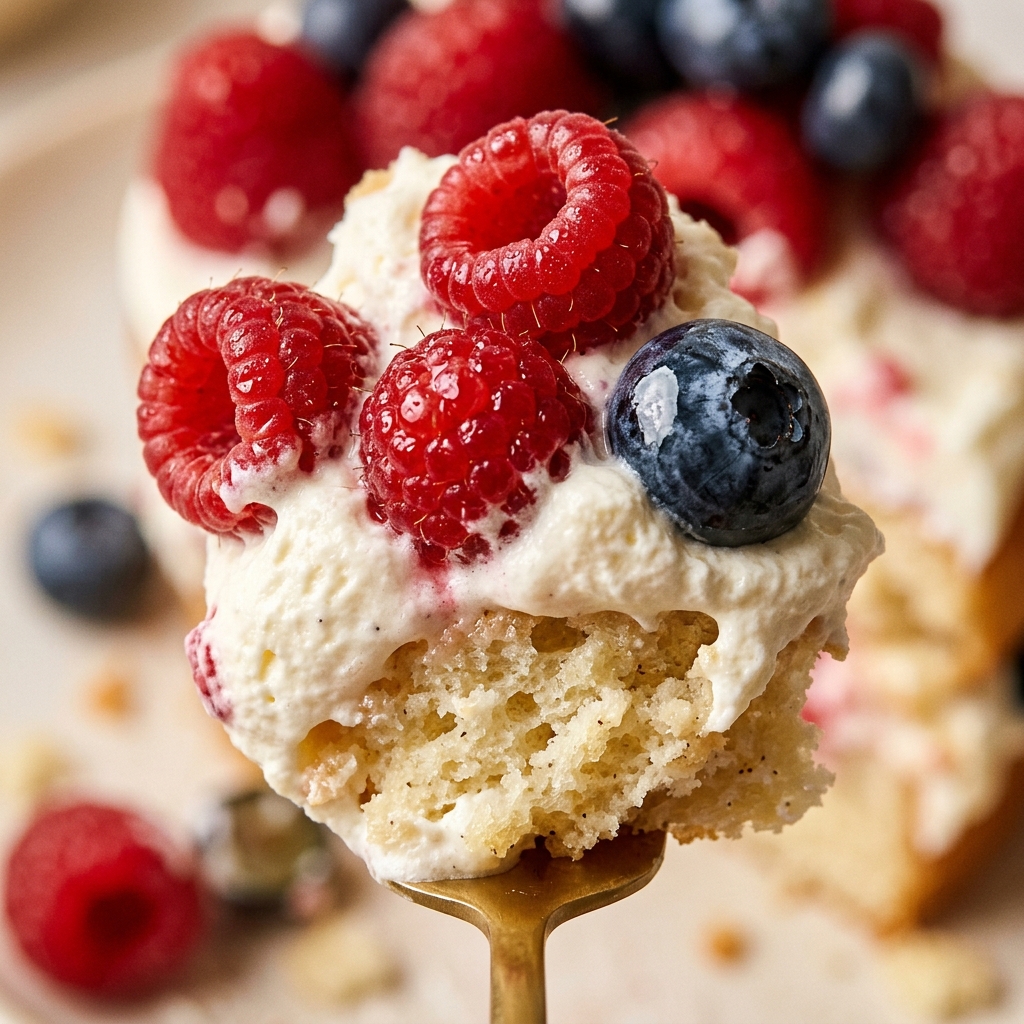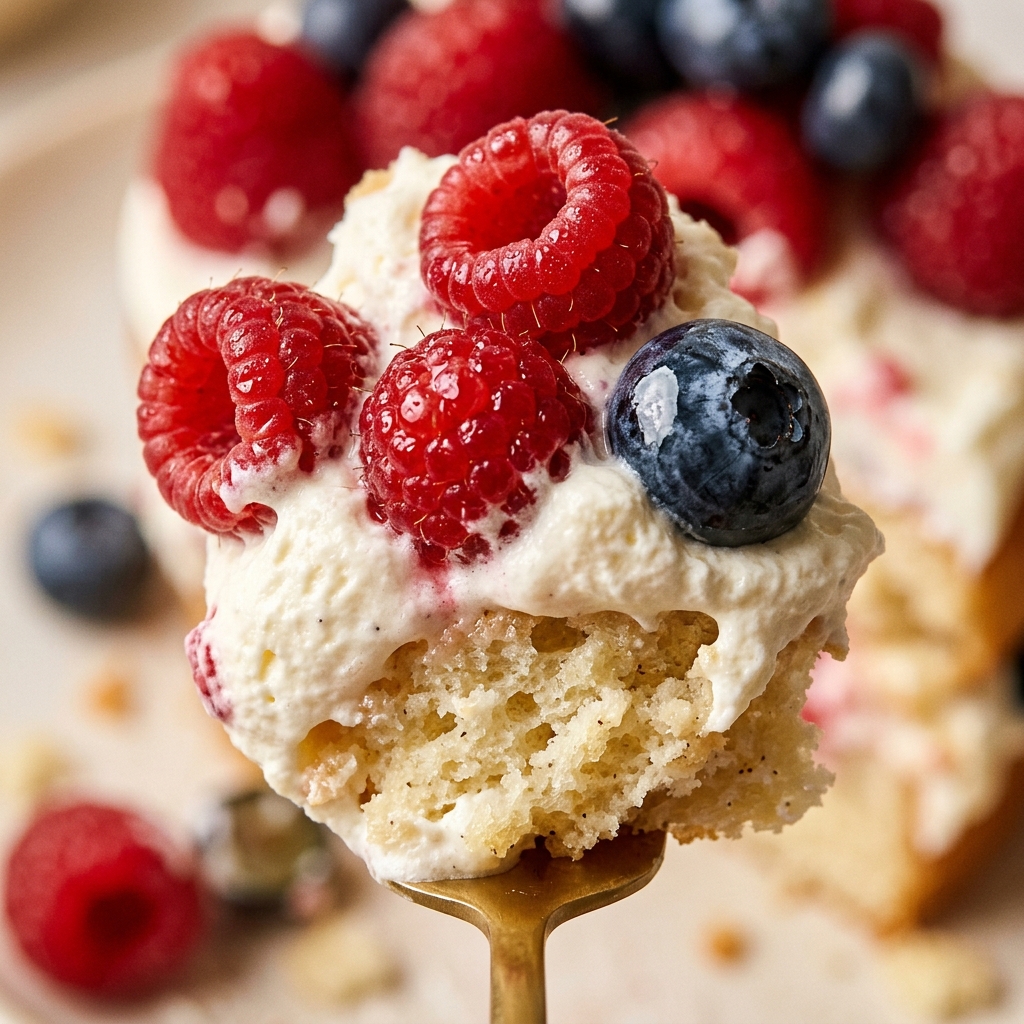
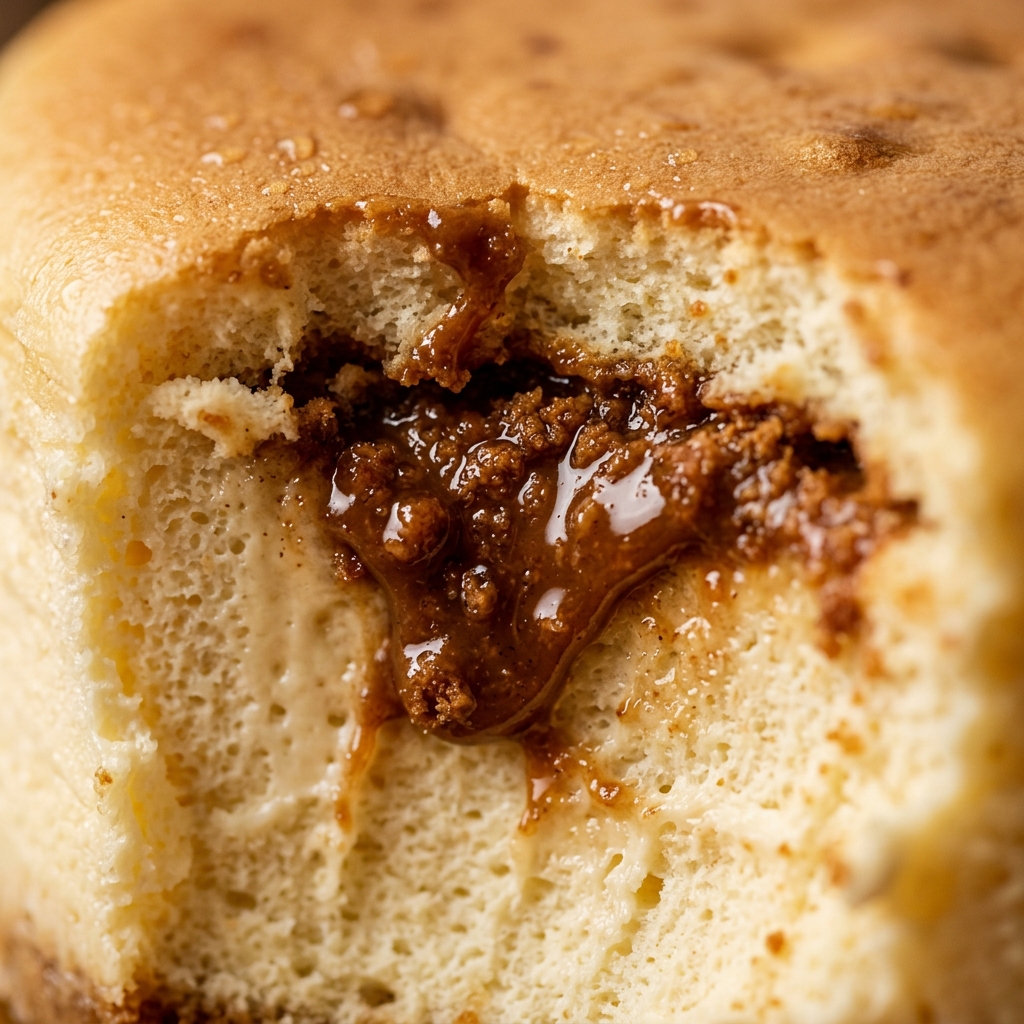
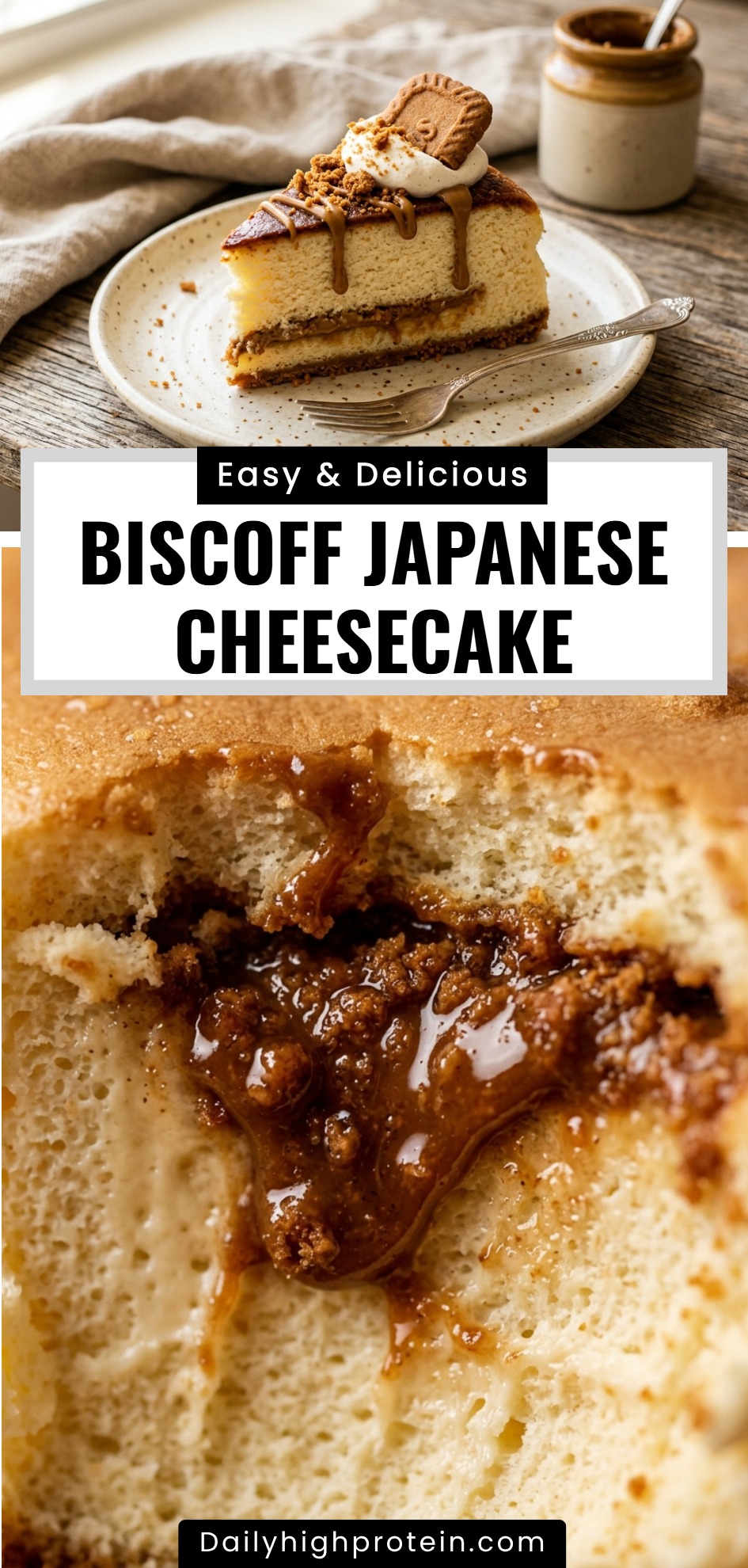
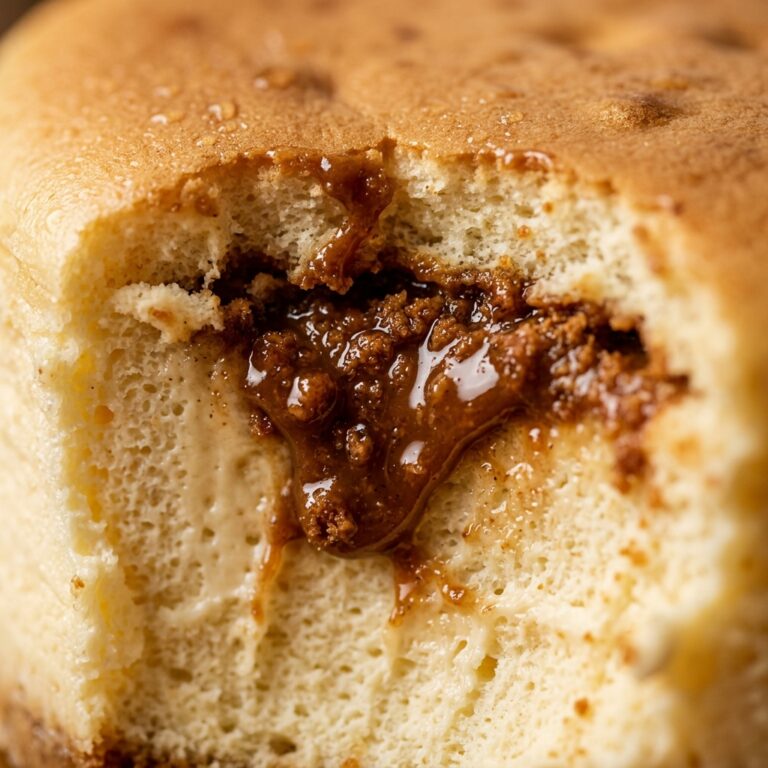
Imagine the cloud-like texture of a classic Japanese soufflé cheesecake merged with the deep, caramelized spice of Biscoff. This dessert is the ultimate fusion of East and West, offering a light-as-air crumb that melts in your mouth while delivering that iconic cookie butter flavor. It is a sophisticated treat that looks impressive but feels incredibly comforting.
Making a Japanese cheesecake can seem intimidating, but adding Biscoff spread provides a wonderful stability and depth to the batter. Whether you are hosting a dinner party or simply want to elevate your weekend baking, this Biscoff Japanese Cheesecake is the perfect recipe to master. Let’s dive into how to create this wobbly, spiced masterpiece.
Recipe Information
- Prep Time: 30 minutes
- Cook Time: 70 minutes
- Total Time: 1 hour 40 minutes
- Servings: 8
- Difficulty Level: Medium
Nutrition Information
- Calories per serving: 340 kcal
- Protein: 7g
- Carbohydrates: 28g
- Fat: 22g
- Fiber: 1g
- Sugar: 18g
- Sodium: 210mg
Why Make This Biscoff Japanese Cheesecake
This recipe stands out because it balances the richness of cream cheese and Biscoff with the ethereal lightness of whipped egg whites. Unlike dense New York-style cheesecakes, this version is airy and not overly sweet. The warm notes of cinnamon and ginger from the Biscoff spread permeate every bite, making it a unique twist on a viral favorite.
It is also a fantastic project for bakers who want to practice their meringue skills. The result is a cake that “jiggles” when moved and has a soft, sponge-like texture that is truly addictive. If you are a fan of Speculoos cookies, this is quite simply the best way to enjoy those flavors in a refined form.
How to Make Biscoff Japanese Cheesecake
Creating this masterpiece requires patience and a gentle touch, especially when folding the ingredients together. Follow these steps carefully to ensure your cake rises beautifully and maintains its signature fluffiness.
Ingredients
- 250g Cream cheese, softened at room temperature
- 150g Biscoff cookie butter (creamy version)
- 50g Unsalted butter
- 100ml Whole milk
- 6 Large egg yolks
- 6 Large egg whites
- 60g Cake flour
- 20g Cornstarch
- 120g Granulated sugar
- 1/4 tsp Cream of tartar
- 1/2 tsp Vanilla extract
- 4-5 Biscoff cookies (for garnish)
Directions
Step 1: Preparation and Oven Setup
Preheat your oven to 160°C (320°F). Grease an 8-inch round cake pan and line the bottom and sides with parchment paper. Make sure the parchment paper stands at least 2 inches above the rim of the pan, as the cake will rise significantly. Prepare a larger roasting tray for the water bath.
Step 2: Melting the Base Ingredients
In a heatproof bowl set over a pot of simmering water (double boiler), combine the cream cheese, unsalted butter, whole milk, and Biscoff cookie butter. Whisk continuously until the mixture is completely smooth and melted. Remove the bowl from the heat and let it cool slightly.
Step 3: Mixing in the Yolks and Flour
Whisk the egg yolks and vanilla extract into the cheese mixture until well combined. Sift the cake flour and cornstarch directly into the bowl. Whisk gently until the batter is smooth and no lumps remain. For an extra silky texture, pour the batter through a fine-mesh sieve into a clean bowl.
Step 4: Creating the Meringue
In a separate large, clean bowl, beat the egg whites and cream of tartar using an electric mixer on medium speed until frothy. Gradually add the granulated sugar one tablespoon at a time. Continue beating until you reach soft peaks. The meringue should be glossy and hold its shape but the tip should curl over when the whisk is lifted.
Step 5: Folding the Batter
Gently fold about one-third of the meringue into the Biscoff cheese base using a spatula to lighten the mixture. Add the remaining meringue and fold very gently using a “cut and fold” motion. Be careful not to deflate the air bubbles, as these are what make the cake rise. Stop as soon as the color is uniform.
Step 6: The Water Bath and Baking
Pour the batter into the prepared cake pan and tap it firmly on the counter once to release large air bubbles. Place the pan inside the roasting tray and fill the tray with hot water until it reaches halfway up the side of the cake pan. Bake at 160°C (320°F) for 20 minutes, then reduce the heat to 140°C (285°F) and bake for another 40-50 minutes.
Step 7: Gradual Cooling
Once the cake is golden on top and set, turn off the oven. Prop the oven door open slightly with a wooden spoon and let the cake cool inside for 30 minutes. This prevents the cake from collapsing due to a sudden temperature change. Remove from the oven, let it cool completely in the pan, then refrigerate for at least 4 hours before unmolding.
How to Serve Biscoff Japanese Cheesecake
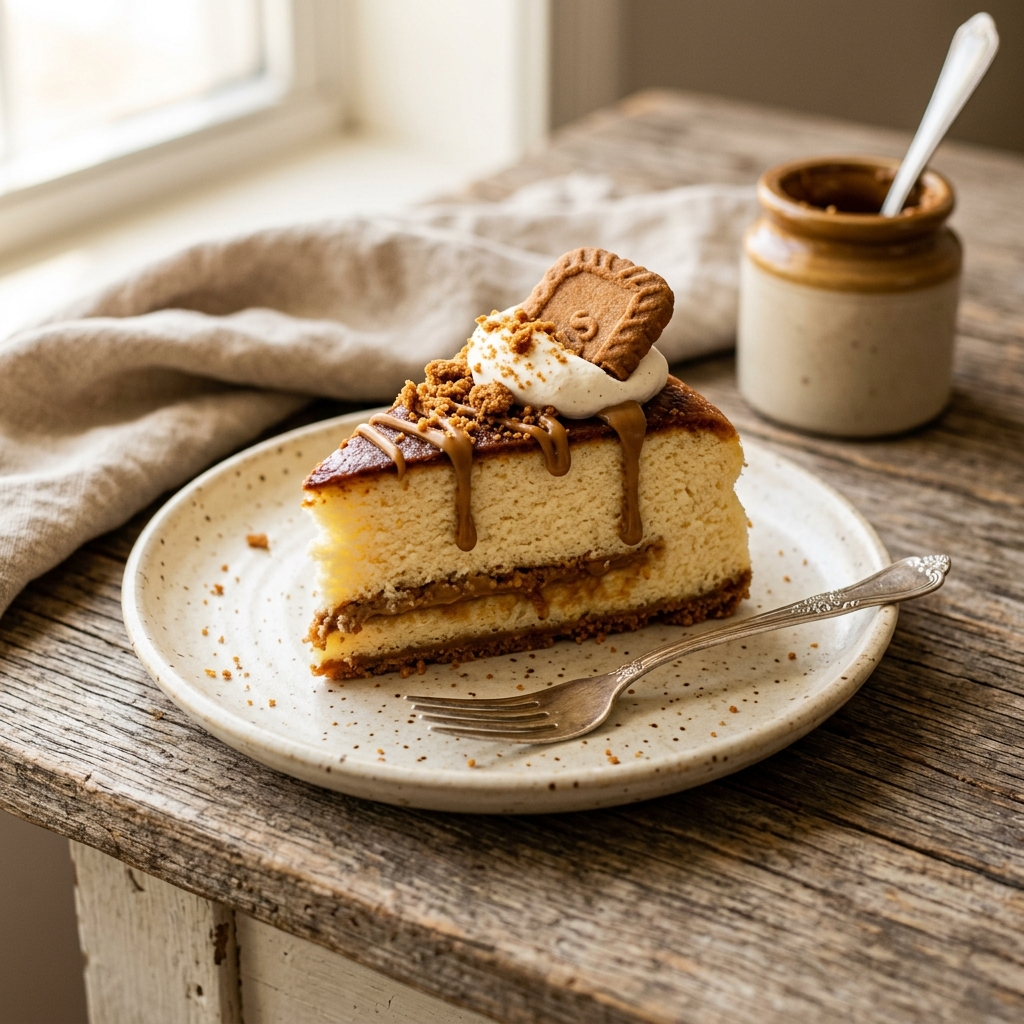
This cheesecake is best served chilled. For a beautiful presentation, melt a tablespoon of Biscoff spread and drizzle it over the top of the cake. Crush a few Biscoff cookies and sprinkle the crumbs around the edges. Use a sharp, thin knife dipped in hot water to get clean slices, wiping the knife between each cut.
How to Store Biscoff Japanese Cheesecake
Store any leftovers in an airtight container in the refrigerator for up to 4 days. Because of its high egg content and airy structure, it does not freeze well, as the texture can become grainy or rubbery upon thawing. Always keep it covered to prevent the cake from absorbing other odors in the fridge.
Expert Tips for Perfect Biscoff Japanese Cheesecake
First, ensure your egg whites are at room temperature to achieve the best volume. Second, do not overbeat the meringue to “stiff peaks”; soft peaks allow the cake to expand in the oven without cracking. Finally, make sure your water bath is truly hot when you start baking to create the steam necessary for that soufflé texture.
Delicious Variations
For a different twist, you can use Crunchy Biscoff spread in the base for tiny bits of cookie texture, though it may slightly affect the smoothness. You can also add a layer of crushed Biscoff cookies at the very bottom of the pan before pouring in the batter. Another great idea is to serve it with a dollop of lightly sweetened whipped cream on the side.
Frequently Asked Questions
Q: Why did my cheesecake crack on top?
The oven temperature was likely too high, or the egg whites were beaten to stiff peaks. Lowering the temperature and keeping the meringue at soft peaks will help.
Q: Can I use all-purpose flour instead of cake flour?
Cake flour has less protein and results in a softer crumb. If you must use all-purpose, replace 1 tablespoon of the flour with an extra tablespoon of cornstarch.
Q: Why did my cake shrink significantly after cooling?
A little bit of shrinkage is normal, but excessive shrinking usually happens if the cake is cooled too quickly. Always use the “propped oven door” method for gradual cooling.
Q: My cake is wet at the bottom. What happened?
This usually means water from the water bath leaked into your pan. If using a springform pan, wrap the bottom tightly in several layers of heavy-duty aluminum foil.
Q: Can I use a different brand of cookie butter?
Yes, any Speculoos-style spread will work perfectly fine in this recipe as long as the consistency is similar to Biscoff.
Conclusion
Mastering the Biscoff Japanese Cheesecake is a rewarding experience for any home baker. It combines the technical challenge of a soufflé with the beloved, trendy flavor of cookie butter. The result is a dessert that is as beautiful to look at as it is delicious to eat. Give this recipe a try and enjoy the light, airy, spiced goodness of a truly unique cheesecake.
Biscoff Japanese Cheesecake
- Total Time: 1 hour 40 minutes
Ingredients
250g Cream cheese, softened at room temperature; 150g Biscoff cookie butter (creamy version); 50g Unsalted butter; 100ml Whole milk; 6 Large egg yolks; 6 Large egg whites; 60g Cake flour; 20g Cornstarch; 120g Granulated sugar; 1/4 tsp Cream of tartar; 1/2 tsp Vanilla extract; 4–5 Biscoff cookies (for garnish)
Instructions
Step 1: Preparation and Oven Setup: Preheat your oven to 160°C (320°F). Grease an 8-inch round cake pan and line the bottom and sides
- Cook Time: 1 hour 40 minutes
- Diet: Vegetarian